
Table of ContentCloseOpen
- Five Things to Know Before You Play
- [1] What is Blackjack and What is the Goal of the Game?
- \[4] Blackjack Rules: Dealing Sequence and Available Player Actions
- [7] Types of Blackjack Games: Demo, RNG, and Live Dealer Blackjack
- \[11] Blackjack Strategy: Basic Principles at the Table
- \[13] Accessing Online Blackjack and Selecting a Casino Platform
- \[16] Safety, Fairness, and Payments in Real Money Blackjack
- [19] Mobile Blackjack: Playing on Smartphones and Browsers
- [21] FAQ About Online Blackjack
"Before inspecting any welcome offer or virtual table, a responsible editor checks the fine print: licensing status, payout rules, wagering conditions, and jurisdictional restrictions. Understanding the mechanics, house edge, and legal boundaries of online blackjack is the only reliable way to evaluate value and manage risk." — Claire Bennett, Senior iGaming Content Editor
Last reviewed and updated: January 2026 · Editorial scope: rules, formats, mathematics, Australian regulation, responsible play
Five Things to Know Before You Play
- The goal is fixed, the maths is not. You aim to beat the dealer's hand without exceeding 21, but the house edge shifts with table rules: number of decks, the dealer soft-17 rule (H17 vs S17), doubling and splitting permissions, and whether a natural pays 3:2 or 6:5.
- Basic strategy is the single biggest lever. Correct play under standard rules trims the house edge to roughly 0.5%. Guesswork inflates long-run losses substantially. A full decision matrix is included below.
- Format determines pace and cost. Demo play is risk-free practice, RNG tables run 300+ hands per hour, live dealer tables run 40 to 60 hands per hour with human dealers and higher limits.
- Bonuses rarely favour blackjack. Table games typically contribute 0% to 10% toward wagering requirements, meaning a $100 bonus at 30x can demand up to $30,000 in blackjack turnover.
- Australian law matters. Under the Interactive Gambling Act 2001, real-money online casino games may not be supplied to people in Australia, and since 11 June 2024 credit cards, credit-linked digital wallets and cryptocurrency are banned for licensed online wagering.
That is the short version. The detail below is where the money actually sits.
[1] What is Blackjack and What is the Goal of the Game?
Blackjack is a classic casino card game where a player competes directly against the dealer to form a hand value as close to 21 as possible without exceeding it. Unlike peer-to-peer card games such as poker, a player in a blackjack game is solely evaluating their own hand against the dealer's upcard and hidden card. In Australian gaming research, casino table games, blackjack included, are recognised as high-engagement products where understanding the core mechanics is fundamental to evaluating risk and potential return.
"Gambling participation in Australia recovered to 61.3% in 2023 following the pandemic-era decline, with online formats accounting for a substantial share of that growth." — ANUpoll, Australian National University, repeated cross-sectional surveys 2019–2024 (samples up to 4,027 respondents)
"Among casino table game players, 19.2% experience moderate or high gambling risk, the highest share recorded across all mainstream gambling forms." — NSW Gambling Survey 2024, Central Queensland University, random sample of 10,000 NSW adults, March–May 2024. https://www.gambleaware.nsw.gov.au/
That combination, rising online participation alongside a measurable concentration of harm among table game players, is precisely why a technical understanding of rules, payout structures and bankroll discipline matters more in blackjack than in almost any other casino product.
The fundamental dynamic of dealer blackjack revolves around fixed point values assigned to cards. The game begins after bets are placed, with both the player and the dealer receiving two cards. The player then decides whether to draw additional cards or hold their total, based on the visible strength of the dealer's hand.
[2] How Cards and the 21 Combination Are Calculated
In online blackjack and land-based tables alike, cards 2 through 10 carry their face value, face cards (Jack, Queen, King) are worth 10 points, and an Ace functions as either 1 or 11 depending on which value benefits the hand total. A "hard hand" contains no Ace, or an Ace valued at 1 point. A "soft hand" contains an Ace valued at 11 points without pushing the total past 21.
A natural blackjack is formed when the opening two-card hand consists of an Ace and any 10-value card (10, Jack, Queen, King). This combination automatically achieves a total of 21.
In standard casino rules, a natural blackjack pays out at odds of 3:2, whereas some modern single-deck or promotional variants reduce this payout to 6:5, which significantly increases the house edge against the player.
The payout mathematics, stated plainly: under a standard six- to eight-deck game with a 3:2 natural and correct basic strategy, the house edge sits at roughly 0.5%. Cutting the natural payout to 6:5 adds approximately 1.39 percentage points, pushing the edge toward 2%. In practical terms, a table advertising "single deck" with a 6:5 natural is mathematically worse for the player than a standard eight-deck table paying 3:2. Many promotional pages quietly omit that distinction.
"Casino table games, including blackjack, show the highest concentration of moderate- and high-risk players among all mainstream Australian gambling forms." — NSW Gambling Survey 2024, Casino Table Games Summary, Central Queensland University (sample: 10,000 adults). https://www.gambleaware.nsw.gov.au/
[3] When the Player Wins, Loses, or Receives a Push
A player wins a hand of playing blackjack if their total score is higher than the dealer's total without exceeding 21, or if the dealer exceeds 21 (known as a "bust") while the player's hand remains valid. A winning hand generally pays 1:1 on the initial wager, except for a natural blackjack, which pays 3:2 under standard rules.
A loss occurs if the player's hand total exceeds 21 (an immediate bust, resulting in forfeiture of the bet before the dealer acts) or if the dealer's final hand total is closer to 21 than the player's. If both the player and the dealer finish with the exact same point total, the outcome is designated as a "push" or tie.
In the event of a push, the initial wager is returned to the player without any net gain or loss.
Expressed as settlement arithmetic: a win returns stake × decimal odds (net profit = stake × (odds − 1)); a loss returns zero and the net result is −stake; a push returns 100% of the stake for a net result of zero. Simple, but worth internalising before you sit down at real-money blackjack tables.
- Type:Infographic / Comparison Diagram
- Description:Visual comparison scheme detailing four main hand outcomes: Natural Blackjack (3:2 payout), Points Win (1:1 payout), Bust (Loss), and Push (Tie).
- Purpose:Helps a new player grasp the outcome mechanics and financial returns of a blackjack game within seconds.
- Semantic Markup Rules:Uses
figureandfigcaptionelements withalt="blackjack rules comparison diagram". Textual descriptions of outcomes are fully mirrored in the DOM structured content.
[4] Blackjack Rules: Dealing Sequence and Available Player Actions
The standard dealing sequence in playing blackjack follows a strict order of operations, starting from bet placement and ending with the final comparison of hand totals. According to established card game regulations (Bicycle Cards Standard Rules), once all players place their initial bets on the designated table areas, the dealer deals two cards face-up to each participant and two cards to themselves (typically one face-up upcard and one face-down hole card).
Players evaluate their totals and make decisions sequentially from left to right. Once all player hands are resolved, the dealer reveals their face-down card and must follow fixed house rules, most commonly drawing additional cards until reaching a minimum total of 17.
[5] Hit and Stand: When to Draw a Card or Hold
The two primary decisions in any blackjack game are Hit (requesting another card from the dealer) and Stand (ending your turn and retaining your current point total). A player may hit as many times as desired provided their hand total does not exceed 21. Each extra card, though, introduces the mathematical risk of busting.
Dealer actions are strictly bound by house rules, which removes personal choice from the dealer's turn. Under standard S17 rules, the dealer must stand on all totals of 17 or higher, including soft 17.
Under H17 rules, the dealer is required to hit on a soft 17 (an Ace-6 hand), which slightly increases the casino's statistical advantage, typically by around 0.2 percentage points. That sounds trivial. It is not, once you multiply it by 300 hands an hour.
"Among casino table game players who play at least monthly, 50.1% fall into the moderate- or high-risk category." — NSW Gambling Survey 2024, Casino Table Games Summary, Central Queensland University. https://www.gambleaware.nsw.gov.au/
[6] Double, Split, and Surrender in Blackjack Rules
Special tactical options become available on the opening two-card hand, depending on the specific table rules:
- Double Down:Allows the player to double their original bet in exchange for receiving exactly one additional card. This option is typically chosen when the starting hand total is 9, 10, or 11, and is normally restricted to the first two cards.
- Split:If the initial two cards are of equal rank (such as two 8s or two Aces), the player can pay an additional wager equal to the original bet to separate the cards into two independent hands. Each hand is then played separately. Most rule sets limit re-splitting and restrict further action on split Aces.
- Surrender:Available on select tables, this option allows a player to fold immediately after the deal, forfeiting 50% of their original wager and retaining the remaining 50%. The mathematically correct applications are narrow: surrender hard 16 against a dealer 9, 10, or Ace, and surrender hard 15 against a dealer 10. Outside these spots, surrendering costs expected value.
- Insurance:A side bet offered when the dealer's upcard is an Ace, paying 2:1 if the dealer's hidden card is a 10-value card. Statistically, insurance carries a high house edge and is generally advised against by basic strategy frameworks. The arithmetic is straightforward: in an eight-deck shoe, roughly 30.8% of remaining cards are ten-valued, but the bet pays as though the probability were 33.3%. That mismatch produces a house edge of approximately 7% on the insurance wager, far worse than the base game, and it applies equally to the "even money" offer on a player natural.
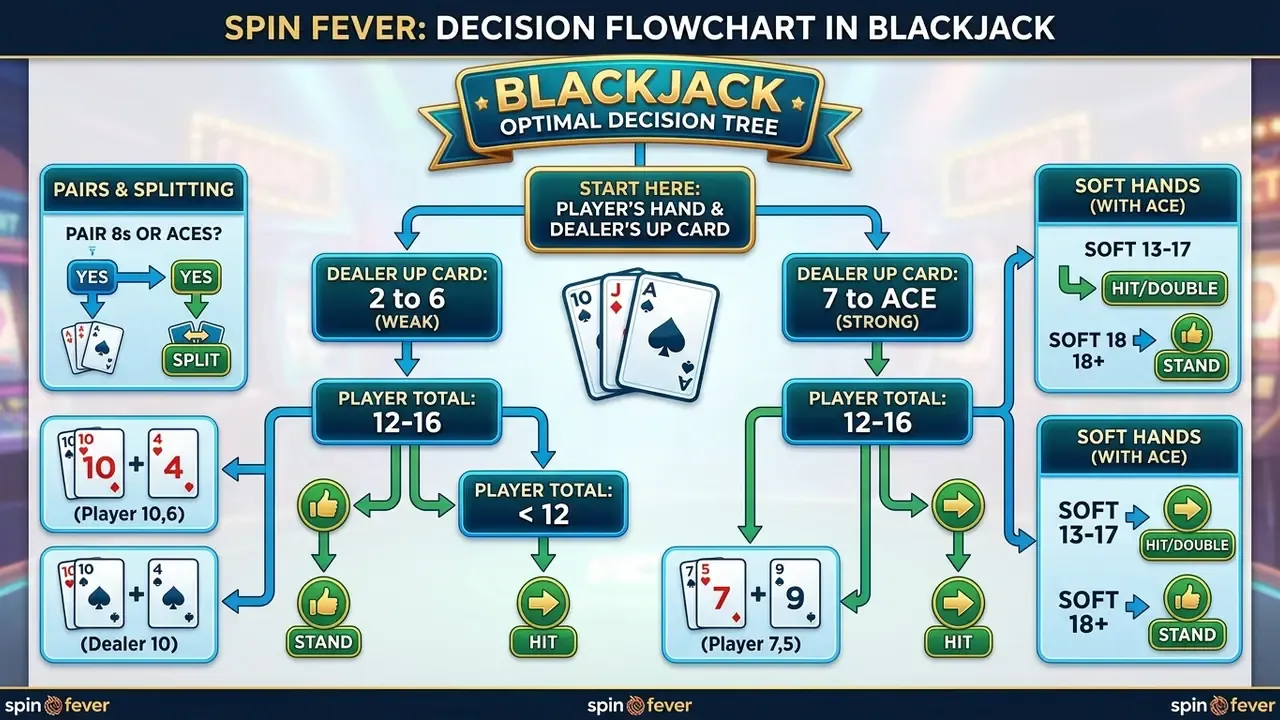
- Type:Decision Tree / Flowchart
- Description:A step-by-step decision flowchart guiding a player from receiving two cards to evaluating hand type (pair, soft total, hard total) and choosing between Hit, Stand, Double, Split, or Surrender. Each action node branches first on "permitted by table rules?" before displaying the option.
- Purpose:Clarifies the sequential choice architecture during live dealer blackjack or RNG play.
- Semantic Markup Rules:Rendered as accessible HTML/SVG with text labels, supplemented by a numbered semantic ordered list in the DOM for screen readers and search crawlers.
[7] Types of Blackjack Games: Demo, RNG, and Live Dealer Blackjack
Modern online casinos offer three distinct formats of blackjack: free demo versions using virtual credits, automated RNG (Random Number Generator) software games, and live dealer blackjack streamed in real time. Choosing between these formats depends on whether you want risk-free practice, rapid single-player gaming, or an authentic casino floor environment.
+---------------------+-----------------------+------------------------+--------------------------+
| Feature             | Blackjack Demo        | RNG Online Blackjack   | Live Dealer Blackjack    |
+---------------------+-----------------------+------------------------+--------------------------+
| Real Money Required | No (Virtual Credits)  | Yes                    | Yes                      |
| Dealer Type         | Software Algorithm    | Software Algorithm     | Human Live Dealer        |
| Dealing Speed       | Instant / User-Paced  | Fast (300+ hands/hr)   | Realistic (40-60 hands/hr)|
| Table Limits        | Unlimited Practice    | Low to Moderate ($1+)  | Moderate to VIP ($5-$5k+) |
| Bonus Contribution  | N/A                   | Typically 0% - 10%     | Typically 0% - 5%        |
+---------------------+-----------------------+------------------------+--------------------------+
[7A] Online Blackjack vs Australian Land-Based Casinos: Limits and Access
Playing blackjack online presents significant financial and operational differences compared to brick-and-mortar venues such as Crown Melbourne (Victoria) or The Star Sydney (NSW). Physical tables during peak hours frequently enforce minimum wagers of $15 to $25 per hand, and standard-rules tables at Crown Melbourne have historically opened at around $25 during busy periods. Online RNG and live-streamed tables, by contrast, accommodate stakes starting from roughly $0.50 to $1.00. For a player learning basic strategy, that difference is decisive: a $200 bankroll supports a handful of hands at a peak-hour city table, but hundreds of hands at low-limit online stakes.
Australia's licensed land-based venues are distributed one or two per jurisdiction: Crown Melbourne in Victoria (whose Mahogany Room is a high-roller salon inside the complex rather than a separate licensed casino), The Star Sydney in New South Wales, The Star Gold Coast, Treasury Brisbane, Pullman Reef Casino in Cairns and The Ville in Townsville across Queensland, Crown Perth in Western Australia, Wrest Point and the Mona-linked venue in Tasmania, SkyCity Adelaide in South Australia, plus SkyCity Darwin and Lasseters in Alice Springs in the Northern Territory. Crown Melbourne alone runs upwards of 50 blackjack tables, ranging from $10 minimums to tables accommodating five-figure wagers in the high-roller rooms.
+---------------------------+------------------------------+-------------------------------+
| Parameter                 | Australian Land-Based Table  | Online Blackjack (RNG / Live)  |
+---------------------------+------------------------------+-------------------------------+
| Typical Minimum Bet       | $10 - $25 per hand (peak)    | $0.50 - $5 per hand           |
| Maximum Bet               | Up to $10,000+ (VIP rooms)   | $5,000+ (VIP live tables)     |
| Rule Variety              | 2-4 rule sets per venue      | Dozens of variants            |
| Hands Per Hour            | 50 - 70 (shared table)       | 40-60 live / 300+ RNG         |
| Availability              | Venue trading hours, travel  | 24/7, device-based            |
| Consumer Protection (AU)  | State casino regulator       | Depends on jurisdiction (see [14])|
+---------------------------+------------------------------+-------------------------------+
One practical footnote from the floor: a shared land-based table deals 50 to 70 hands an hour across all seats, so your personal exposure per hour is lower than the raw figure suggests. Online, you are the only decision-maker, and every one of those 300 hands is yours.
[8] Blackjack Demo and Free Play for Game Familiarisation
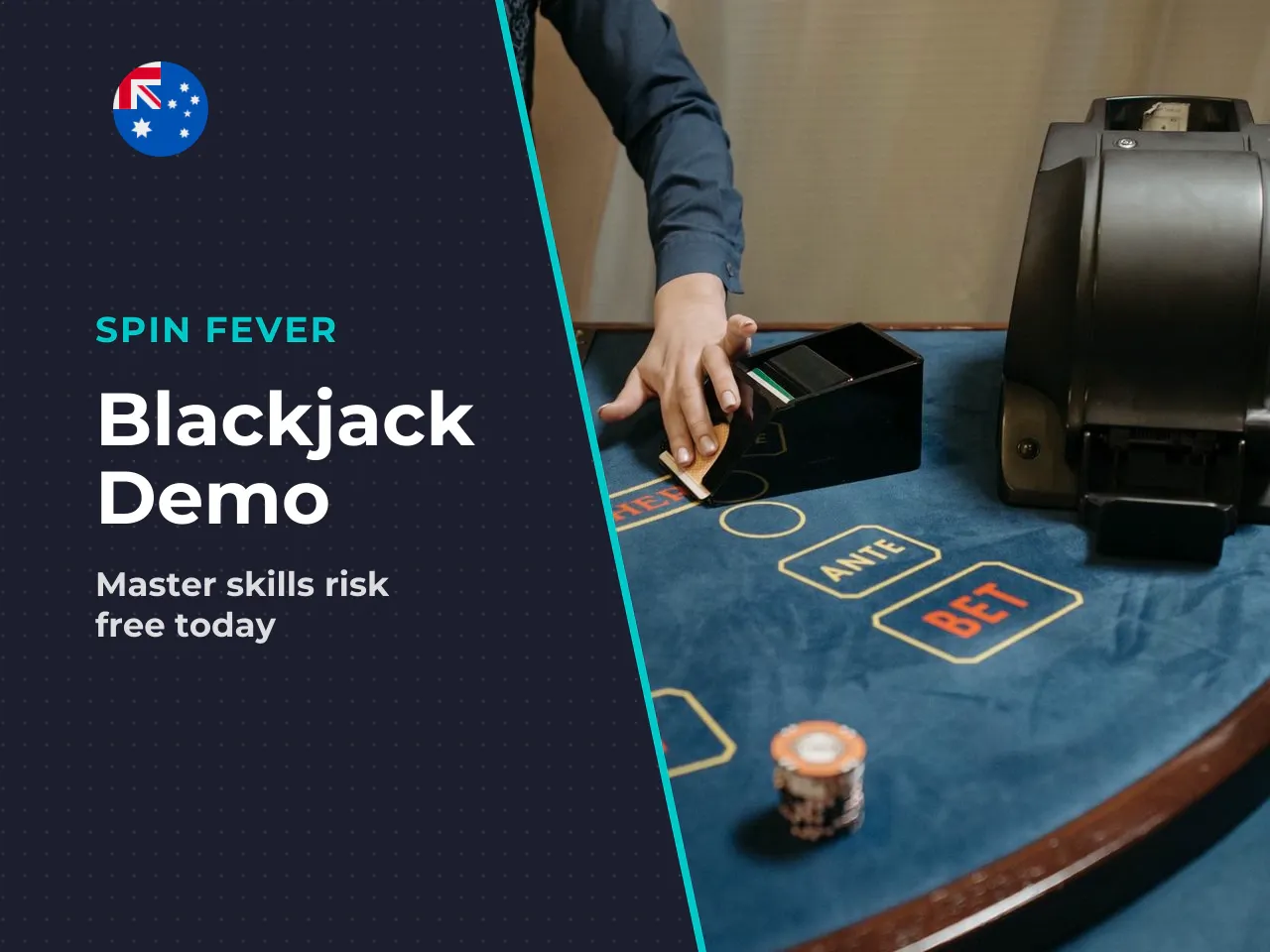
A blackjack demo allows players to experience full game mechanics using simulated chips, with zero financial risk and no requirement to deposit funds. In demo modes, wins and losses only affect a temporary practice balance. Funds cannot be converted into real currency or withdrawn, because there is no linked payment account behind the balance at all.
Using demo modes serves as an educational sandbox: test basic strategy decisions, learn how rule variations behave (H17 vs S17, doubling restrictions, surrender availability), and check the interface layout before considering real-money play. Ten minutes of free blackjack play will tell you more about a table's rule set than any promotional page.
[9] RNG Blackjack Games in Online Casino Platforms
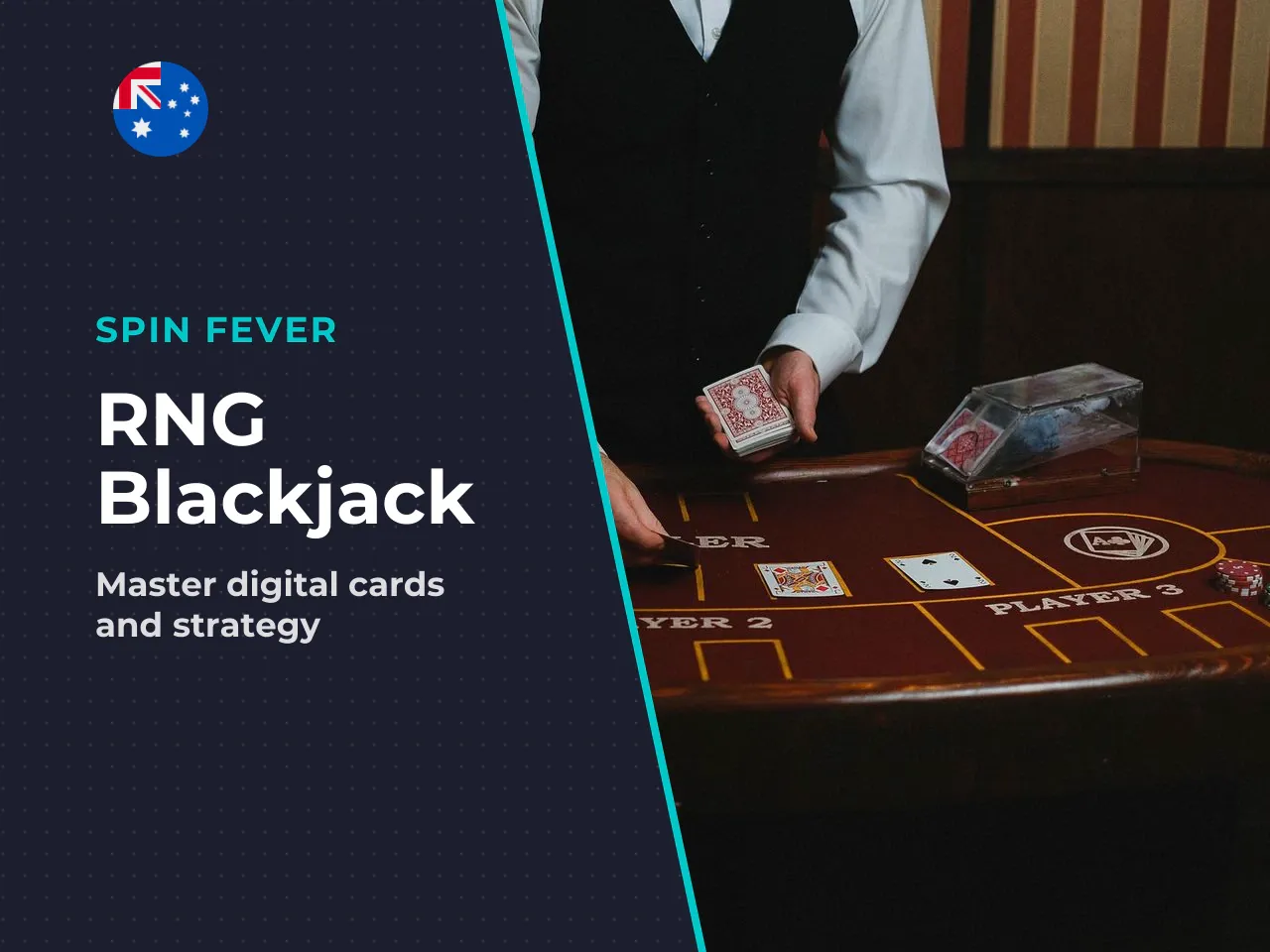
RNG online blackjack games use software algorithms, specifically Random Number Generators, to deal cards from a mathematically randomised virtual deck. Independent testing laboratories publish the criteria against which those algorithms are assessed: eCOGRA states that it performs independent testing and certification of online gambling software, including RNG and game fairness (eCOGRA Standards); iTech Labs documents testing of RNGs, game fairness and game logic for regulated markets; and Gaming Laboratories International (GLI) audits and certifies gaming systems, including mathematical evaluation of RNG platforms, for regulators worldwide. Where a fairness claim is not backed by a named laboratory report, treat it as unverified.
Leading software developers such as Microgaming, Playtech, and NetEnt describe their blackjack titles as RNG-based with randomised deals. Note that published technical specifications, meaning precise dealing speeds in hands per hour or the exact algorithm behind Continuous Shuffling Machine (CSM) emulation, are generally not disclosed in vendor documentation.
Any specific figure quoted elsewhere should therefore be treated as an estimate rather than a certified parameter.
RNG titles suit solo players who prefer total control over the pace of play, with no waiting for other participants or video streams to load. That speed is a double-edged feature. At 300+ hands per hour, even a 0.5% house edge is applied to a very large volume of turnover, so the theoretical cost of an hour's play can quietly exceed what the same edge implies at a live table.
[10] Live Blackjack with Real Live Dealers
Live dealer blackjack streams high-definition video of a professional dealer operating physical card tables inside dedicated studios. Providers such as Evolution Gaming and Pragmatic Play Live both document a real dealer, live-streamed gameplay and chat-based interaction in their product materials. Their licensing scope, however, varies by jurisdiction, and Australian readers should verify which regulator covers any given studio on the operator's terms page rather than assuming global approval. Players place bets via an interactive digital overlay while watching physical cards dealt in real time, with built-in chat functions for social interaction.
Live casino formats replicate land-based atmospheric conditions and offer specialised tables such as VIP suites, Speed Blackjack, and Infinite Blackjack, where unlimited players share a single dealt hand with independent decision-making.
Studio rule sets differ, and the differences are financially material:
- Evolution Gaming (Infinite Blackjack / Speed Blackjack): Eight decks, dealer stands on soft 17 (S17), double down permitted on any initial two cards, and Double After Split (DAS) allowed. Infinite Blackjack removes seat limits entirely: every player receives the same opening two cards and then decides independently at their own terminal.
- Visionary iGaming (ViG): Commonly featured on offshore platforms marketing to Australian visitors. The dealer stands on a hard 17 but hits on a soft 17 (H17), six decks are used and shuffled manually, which some players prefer for transparency, and Double After Split is permitted except on split Aces.
- LuckyStreak: Operates standard European and American-style tables with the dealer standing on 17, plus a built-in bet-behind function that lets you back another player's hand when all seats are occupied.
Because H17 costs the player roughly 0.2% in expected value relative to S17, and because restrictions on doubling after a split cost a further fraction of a percent, two live blackjack tables that look identical on screen can carry meaningfully different edges. Read the "game rules" tab in the table interface, not the lobby thumbnail.
[10A] Online Blackjack Tournaments: Formats and Competition Rules
Unlike standard player-versus-dealer rounds, online blackjack tournaments structure play as a competition against other participants over a set number of hands or a fixed time limit. Chip accumulation relative to rivals, not raw profit, determines the result, which changes optimal strategy: trailing players must increase variance late in a round, while chip leaders often mirror the field's bet sizing to protect a lead. Key tournament formats include:
- Freeroll Tournaments: Entry-free competitions offering real money or bonus prize pools, useful as risk-free practice for strategic players and a low-cost way to learn tournament-specific bet sizing.
- Buy-In Tournaments: Standard competitive events requiring a fixed entry fee, which funds a centralised prize pool distributed among the top chip holders.
- Sit & Go (SNG): Fast-paced, small-scale tournaments that commence automatically once all designated seats, typically six to nine, are filled, allowing players to join and exit between events.
- Scheduled / Multi-Round Events: Large-scale structured tournaments with pre-set start times, where top chip counts advance through preliminary and semi-final elimination stages toward a final table.
Tournament entry fees, prize structures and eligibility are set by the individual operator, and in Australia the same jurisdictional restrictions described in section [14] apply to real-money tournament play.
- Verification Criteria:Independent testing laboratories such as eCOGRA, iTech Labs, and Gaming Laboratories International (GLI) perform rigorous mathematical audits on RNG algorithms to verify true randomness and payout integrity (eCOGRA Standards).
- Editorial Note:For live dealer tables, fairness relies on physical security protocols, continuous overhead camera surveillance, manual or automated shuffle procedures, and official regulatory licensing from recognised gambling authorities.
- Our Verification Protocol:For every platform covered in our iGaming platform reviews, the editorial team checks four items before publication: a licence number that resolves in the regulator's public register, a valid TLS certificate on all deposit and login pages, a named testing laboratory attached to the RNG suite, and the stated table-game contribution rate inside the bonus terms rather than the promotional banner.
[11] Blackjack Strategy: Basic Principles at the Table
Applying a mathematically calculated blackjack strategy allows players to minimise the house edge to roughly 0.5% under standard rule sets. Basic strategy removes guesswork by prescribing the optimal action for every possible hand total against any dealer upcard, based on probability. It is also the only widely documented, rule-legal method of reducing the edge in an online environment where card counting is neutralised by continuous shuffling.
The 0.5% figure is rule-dependent rather than universal. Published house-edge estimates vary with deck count, the dealer's soft-17 rule, doubling and re-splitting permissions, surrender availability and the natural payout. Under favourable rules with perfect basic strategy, the edge can fall slightly below 0.5%; under H17 with a 6:5 natural it can exceed 2%. Blackjack is therefore best understood as a mixed skill-and-chance game in which the ruleset sets the ceiling and your decision accuracy determines how close you get to it.
[12] Basic Strategy Decisions for Hit, Stand, Double, and Split
The core rules of basic strategy are summarised in standardised decision tables: a matrix in which rows represent the player's hand, columns represent the dealer's upcard, and each cell prescribes hit, stand, double, split or surrender. They are usually grouped by hand type.
-
Hard Hands:
- Always Hit on hard totals of 8 or less.
- Double on 10 or 11 if the dealer's upcard is weaker (2 through 9); otherwise, Hit.
- Stand on hard 17 or higher regardless of the dealer's upcard.
- Stand on hard 12 to 16 if the dealer shows a weak upcard (2 through 6), as the dealer faces a high risk of busting.
- Against a dealer 2 or 3, always Hit hard 12.
-
Soft Hands (containing an Ace valued as 11):
- Always Stand on soft 19 (Ace-8) or higher.
- Double on soft 13 through soft 18 if the dealer shows a 4, 5, or 6.
- Hit soft 18 when the dealer shows 9, 10 or Ace.
-
Pairs (Splitting Decisions):
- Always Split Aces and 8s. Splitting Aces maximises the chance of hitting two 21 totals, while splitting 8s breaks up a weak hard 16.
- Never Split 10s or 5s. A pair of 10s gives a strong total of 20, while a pair of 5s equals 10, which is ideal for doubling.
- Stand on a pair of 9s against a dealer 7. With four 10-value ranks in the deck, the dealer most often finishes on 17, and your 18 wins.
[12A] Basic Strategy Quick-Reference Matrix
Use the matrix below as an at-a-glance reference for standard multi-deck, dealer-stands-on-17 rules. Where doubling is unavailable, hit instead. Where surrender is offered, surrender hard 16 against 9, 10 or Ace, and hard 15 against 10.
Keep the chart open while you play a demo table. Memorisation comes later, and honestly it comes faster than most people expect: the hard-hand rows do most of the work.
[12B] Bets, Limits, and Bankroll Management
Maintaining a disciplined bankroll strategy is vital for surviving statistical variance at the blackjack table. Experienced players use flat-betting techniques, wagering a fixed, small percentage of the total bankroll per hand, typically 1% to 2%. Progressive systems such as the Martingale do the opposite: they escalate financial risk rapidly during losing streaks and collide with table maximums at exactly the moment the sequence needs one more double.
Setting hard session loss limits and profit targets helps prevent emotional decision-making and loss-chasing behaviour.
"Analysis of 1.9 million sessions on PlayNow.com found blackjack players return to play faster after a win, but show no pronounced loss-chasing, unlike roulette players." — Journal of Behavioural Addictions (2024), behavioural study of PlayNow.com, British Columbia: 15,544 players, 1,909,681 sessions. https://akjournals.com/view/journals/2006/2006-overview.xml
The practical implication is counter-intuitive. For blackjack, the higher-risk trigger appears to be a winning session rather than a losing one. Session limits should therefore cap time and turnover, not just losses. A win-cap and a clock matter as much as a stop-loss.
[13] Accessing Online Blackjack and Selecting a Casino Platform
[💬 Jurisdictional Notice, read before the sections below] Under the Interactive Gambling Act 2001, providing interactive real-money online casino services (including online blackjack) to individuals located in Australia is prohibited. Offshore websites offering real-money blackjack to Australian residents operate outside Australian consumer protection frameworks and may be subject to ISP domain blocking by ACMA. The selection criteria that follow are provided for research and comparative purposes.
Selecting a reputable platform for online blackjack requires evaluating licensing credibility, game diversity, withdrawal terms, and promotional contribution rates rather than looking solely at headline bonus figures. Updated for 2026: in our own editorial testing across online casino platforms, the factors that most reliably separate stable operators from high-risk ones are documented withdrawal timeframes, a verifiable licence number, and a named software-testing laboratory. That is an editorial observation from our review workflow, not an independent academic finding.
Regulatory enforcement data illustrates how large the unlicensed segment is:
"In the October–December 2023 quarter, ACMA completed 20 investigations into 40 gambling websites and found breaches of the Interactive Gambling Act in 17 of them." — ACMA, Action on Interactive Gambling Report, October–December 2023. https://www.acma.gov.au/
When reviewing an online casino, Australian readers should check whether the platform explicitly lists table rules, software providers, and clear terms on table game restrictions, particularly whether blackjack is excluded from bonus play entirely.
Who should skip real-money blackjack sites altogether? Anyone unsure of the legal position in their own jurisdiction. Anyone who plans to fund play with credit, borrowed money or a shared household account. Anyone who has previously self-excluded through BetStop or a state register. And anyone who cannot comfortably absorb the loss of the full deposit. Those are not soft warnings; they are the boundary conditions of the entire product.
[14] Which Blackjack Tables and Game Variants to Look For
A high-quality online casino library should feature a balanced selection of classic and regional variants. The approximate house edge and RTP figures below assume correct basic strategy. Actual values shift with deck count, soft-17 rule and doubling permissions at the specific table:
- Classic Blackjack: Traditional rules with standard 3:2 payouts and 6 to 8 decks. Approx. house edge 0.4% to 0.6% (RTP ≈ 99.4% to 99.6%).
- European Blackjack: The dealer receives only one visible card during the deal and does not draw the second card until the player completes all decisions, which alters doubling and splitting risk. Because there is no dealer peek, a doubled or split bet can be lost entirely to a dealer natural. Approx. house edge 0.6% to 0.8% (RTP ≈ 99.2% to 99.4%).
- American / Vegas Strip Blackjack: The dealer receives a face-down hole card immediately and peeks for a natural blackjack if the upcard is an Ace or 10-value card, which protects additional wagers. Approx. house edge 0.35% to 0.5% (RTP ≈ 99.5% to 99.65%).
- Blackjack Switch: The player plays two hands simultaneously and may swap the second card dealt to each hand, balanced by a 1:1 payout on natural blackjack and a dealer 22 resulting in a push. Approx. house edge 0.6% to 0.7% with switch-optimal play (RTP ≈ 99.3% to 99.4%).
- Pontoon: An Australian-familiar variant with different terminology (twist, stick, buy) and both dealer cards face down. Payouts and five-card-trick bonuses differ substantially, so the edge depends heavily on the specific paytable.
Table limits deserve a look as well. Low-limit blackjack tables from $0.50 let you practise the matrix cheaply; VIP live tables with $5,000 ceilings serve a different player entirely, and mixing the two in one session is a common bankroll mistake.
[15] Evaluating Promotional Offers, Bonuses, and Welcome Packages
Welcome bonuses and deposit matches look generous on the banner, yet table games like blackjack usually carry heavily reduced wagering contribution rates. Because blackjack offers a high Return to Player of up to 99.5% under basic strategy, operators frequently set table-game contribution at 0% to 10%. In plenty of terms and conditions, blackjack is excluded from bonus wagering altogether.
For example: if a $100 bonus carries a 30x wagering requirement ($3,000 in total bets) and blackjack contributes only 10%, you would need to place $30,000 in blackjack turnover to clear the bonus funds. At $10 a hand and 60 hands per hour, that is 3,000 hands, roughly 50 hours of continuous live play, during which the base house edge alone has an expected cost well above the nominal bonus value. Read the terms before opting into any promotion, and check the game-weighting table specifically.
"More than half of online gamblers (51.1%) who had seen bonus offers agreed that their betting increased as a result." — Second National Study of Interactive Gambling in Australia, 2019–2020, online survey of 5,019 adults
Disclaimer: this information is general in nature and does not replace professional advice. Bonus terms, wagering requirements and contribution rates vary by operator and jurisdiction, and should be read in full before opting in.
[16] Safety, Fairness, and Payments in Real Money Blackjack
Disclaimer: this information is general in nature and does not constitute legal or financial advice. Interactive gambling legislation differs by jurisdiction, and readers should confirm the current obligations that apply to their location.
Engaging with real money blackjack means evaluating financial transaction protocols, data encryption, and local regulatory mandates. In Australia, the legal framework for interactive gambling is strictly enforced under the Interactive Gambling Act 2001 (IGA), with the Australian Communications and Media Authority (ACMA) actively monitoring and disrupting illegal online casino operations (ACMA Interactive Gambling Reports).
"In its first year of operation, more than 28,300 Australians registered with BetStop to self-exclude from all licensed online wagering operators." — ACMA, BetStop Year in Review Report, August 2024. https://www.acma.gov.au/
[17] Licences, RNG Certification, and Signs of a Legitimate Casino
Legitimate online gambling platforms operate under verifiable regulatory licences issued by recognised jurisdictions such as the UK Gambling Commission (UKGC), Malta Gaming Authority (MGA), or Curaçao eGaming. UKGC licence conditions require operators to apply anti-money-laundering risk assessments and customer due diligence; the MGA publishes licence-holder obligations covering player protection and security controls. Trusted platforms display:
- Valid SSL/TLS web encryption certificates to safeguard personal and financial data (modern sites rely on TLS behind HTTPS rather than legacy SSL).
- Direct links to independent audit reports from testing bodies like GLI or iTech Labs.
- Transparent terms on account verification and Know Your Customer (KYC) identity checks before payouts are processed.
Express pre-deposit safety checklist:
The scale of enforcement makes step 8 more than a formality:
"Between April and June 2024 ACMA blocked 50 websites, and a further 47 between July and September 2024, predominantly casino-style sites offering blackjack and roulette." — ACMA, Action on Interactive Gambling Quarterly Reports, Q2–Q3 2024. https://www.acma.gov.au/
For comparative context on how these criteria are applied in practice, see our iGaming platform reviews.
[18] Deposits, Withdrawals, and Limits in Real Money Gaming
In June 2024, the Australian Government implemented a nationwide ban on credit cards, credit-linked e-wallets, and cryptocurrencies for licensed domestic online wagering services, to prevent gambling with borrowed funds.
"From 11 June 2024, online wagering providers must decline credit cards, credit-linked digital wallets and cryptocurrency, with penalties of up to AUD 247,500 for non-compliance." — Department of Infrastructure, Transport, Regional Development, Communications and the Arts, Credit Betting Ban (2024). https://www.infrastructure.gov.au/
Two locally significant methods deserve a specific mention:
- POLi Payments: A direct online bank transfer system supported by the major Australian banks (ANZ, CommBank, NAB, Westpac). POLi allows instant deposits straight from a savings or transaction account without exposing card credentials, and because it draws on cleared funds rather than credit, it sits outside the 2024 credit-card ban. Withdrawals are not processed back through POLi; payouts return via standard bank transfer.
- Neosurf Prepaid Vouchers: A cash-based prepaid voucher system sold at Australian newsagencies and retail outlets, allowing privacy-focused deposits without linking personal banking details. Voucher denominations act as a natural hard deposit cap, which some players use deliberately as a spending control.
When evaluating real money options, verify minimum deposit thresholds, maximum daily withdrawal caps, currency conversion fees, and processing timelines. One test is blunt but effective: any operator that accepts a credit-funded deposit from an Australian resident for online casino play is, by definition, not operating within the Australian licensing framework.

- Jurisdictional Notice: Under the Interactive Gambling Act 2001, providing interactive online casino services (including real-money online blackjack) to individuals located in Australia is prohibited. Australian residents researching online casino topics should note that offshore websites offering real-money blackjack operate outside Australian consumer protection frameworks and may be subject to ISP domain blocking by ACMA.
[⚠️ ALERT BOX: Responsible Gambling Reminder]
- Gambling should always be treated as a paid form of entertainment, never as a financial investment or a strategy to generate income.
- Never wager money you cannot afford to lose. Set strict deposit, loss, and time limits before you play. Both GamCare and BeGambleAware identify limit-setting and self-exclusion as the core protective tools available through operator account controls.
- If you or someone you know is experiencing gambling-related harm, free and confidential support is available 24/7 in Australia via Gambling Help Online (1800 858 858) or at gamblinghelponline.org.au. Australian residents can also self-exclude from all licensed online wagering services via BetStop (betstop.gov.au).
[19] Mobile Blackjack: Playing on Smartphones and Browsers
Modern online blackjack titles are built with HTML5, which enables consistent performance across mobile web browsers and dedicated native applications on iOS and Android smartphones.
"Online gamblers spend more than half of their gambling budget via smartphones, reflecting the shift from desktop access to mobile platforms." — Second National Study of Interactive Gambling in Australia, 2019–2020, telephone survey of 15,000 adults plus online survey of 5,019 adults
Mobile optimisation covers touch-screen controls, adaptive display sizing, and full functionality for both RNG and live stream feeds. Apple's Human Interface Guidelines require adaptive layouts across screen sizes and orientations, while Android developer documentation sets equivalent expectations for responsive design and screen-density handling. Those standards decide something very practical: whether a blackjack table's action buttons stay reachable and mis-tap-resistant on a 6-inch display.
[20] Mobile Blackjack in Apps vs Browser Play
Playing online blackjack via a mobile web browser requires no downloads and works across any operating system. Native casino apps, by contrast, offer faster local asset loading and biometric login options such as Face ID, though their availability in app stores depends on regional gambling regulations.
The trade-offs follow from the architecture. A browser session fetches interface assets over the network at each first load, which increases initial data use, whereas a native app stores reusable assets on the device and consumes less data after installation.
Browser play, though, leaves no app icon or local footprint, which some players prefer for privacy, and it cannot be pulled from availability by an app-store policy change.
For live dealer streams, a stable Wi-Fi or 5G connection is recommended to avoid video latency or a dropped stream during an active betting round. If the stream does drop mid-decision, the outcome is normally resolved under the operator's published disconnection policy. Worth reading that clause before you stake real funds, not after.
[21] FAQ About Online Blackjack
[22] Is Blackjack a Game of Skill or Luck?
Blackjack combines skill and chance. Card dealing is inherently random, which is the luck component, while player decisions about when to hit, stand, double, or split directly affect the statistical house edge, which is the skill component. Applying basic strategy reduces the house edge to approximately 0.5% under standard rule sets, a figure that varies with deck count, the dealer's soft-17 rule and doubling permissions. Random guessing significantly increases loss rates.
"Despite the skill element, 50.1% of monthly casino table game players fall into the moderate- or high-risk category. Strategy does not remove structural risk." — NSW Gambling Survey 2024, Casino Table Games Summary, Central Queensland University (sample: 10,000 adults). https://www.gambleaware.nsw.gov.au/
Skill reduces the rate of loss. It does not convert a negative-expectation game into a positive one.
[23] What Are the Basic Rules for a Complete Beginner?
Place a bet, receive two cards, and compare your total against the dealer's upcard. Cards 2 to 10 count at face value, Jack, Queen and King count as 10, and an Ace counts as 1 or 11, whichever helps the hand. Hit to draw a card, stand to end your turn. Exceed 21 and you bust immediately, losing the bet before the dealer acts. The dealer then plays a fixed rule set, generally drawing to at least 17. Closest to 21 without busting wins; equal totals push and the stake is returned.
[24] Can I Practise Blackjack Without Risking Money?
Yes. Demo tables use virtual credits with no deposit and no withdrawal pathway, which makes them the right environment for memorising the strategy matrix above and testing how a specific table handles doubling, splitting and surrender. Freeroll tournaments serve a similar purpose for competitive formats. Keep one limitation in mind: demo play cannot reproduce the emotional pressure of real stakes, so treat a strong demo result as evidence of rule familiarity rather than proof of profitability.
[25] Are Side Bets Mandatory and What is Infinite Blackjack?
Side bets such as Perfect Pairs or 21+3 are entirely optional wagers placed alongside the main bet. Perfect Pairs resolves on the player's first two cards, with common paytables paying 25:1, 12:1 and 6:1 for perfect, coloured and mixed pairs. 21+3 combines the player's two cards with the dealer's upcard as a three-card poker hand, with typical tiers of 9:1, 10:1, 30:1, 40:1 and 100:1 for flush, straight, three of a kind, straight flush and suited trips. The payout odds look attractive, yet the house edge is far higher, often 5% to 10%, and the exact expected value depends on the specific paytable and deck count.
Infinite Blackjack is a live dealer format designed by providers such as Evolution Gaming that removes seating limits. An unlimited number of online players are dealt the same initial two-card hand from a single shared shoe, but each player makes independent choices (Hit, Stand, Double, Split) at their own terminal. Seating is virtual rather than fixed, and no player's decision affects another's outcome.
[26] Is There a Trick to Winning Consistently?
No. There is no guaranteed winning system for blackjack. Card counting, which historically shifted the edge by tracking the ratio of high to low cards remaining, is neutralised online by continuous shuffling and by RNG deals that reshuffle every round. Progressive staking systems such as the Martingale do not change expected value; they redistribute it into rarer but larger losses. The realistic objective is narrower and more useful: minimise the edge with correct basic strategy, choose tables with favourable rules (S17, 3:2 naturals, double after split), and cap both time and turnover before you start.
Metadata
- Title: Online Blackjack in Australia: Rules, Strategy Chart, Live Dealer & Tournaments
- Description: Complete Australian guide to online blackjack: rules, basic strategy matrix, RNG vs live dealer, tournaments, POLi and Neosurf payments, house edge maths and legal status.